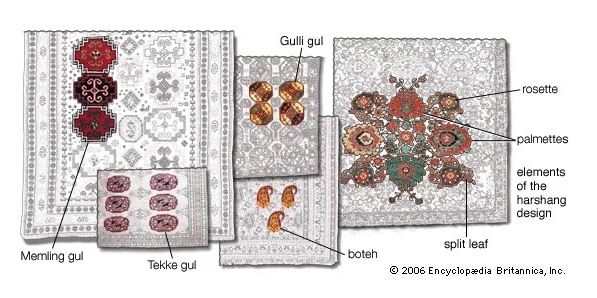
Carpet designsPersian carpets, are considered the most valuable in the world, have many kinds of designs depending on where they are knotted. The cultures, beliefs, and lifestyles of people in various parts of Iran are different, so carpet designs vary. Motifs such as Boteh, Rosette,Shah Abbasi, Gul, Herati, Mina-khani, etc. are some of the designs that commonly appear in Persian carpets. Here we intend to introduce some of the famous Persian designs and the meaning behind them.
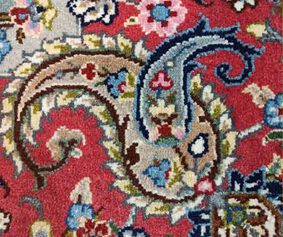
Boteh:Boteh is a combination of a cypress flower bud. This motif represents eternal life in Zoroastrianism. The curved tip of this motif shows endurance and humility at the same time. This pattern began to appear on textiles during the Saxon era. Later, this motif was used in many other countries such as India. In 19th century Scotland, the Boteh pattern, was used as embroidery for Kashmiri shawls and scarves, copied to make the world-famous Paisley shawls.
BotehRosetta:
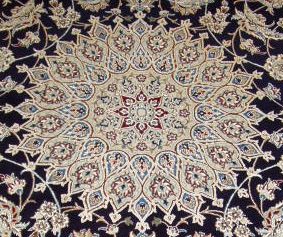
From ancient times until today, the bond between man and nature is strong in Iran. Artists use nature in their artwork to show this connection and make it appreciated. Carpet knotters are also no exception. One of the designs that is strongly related to nature is Rosette. The Rosette design is a circular arrangement of patterns radiating from the central medallion like the petals of a rose. The same design can also be used in the borders, however it is mostly used in the field and can be represented in a floral or geometric manner. Rosette design is often found in carpets Nain.
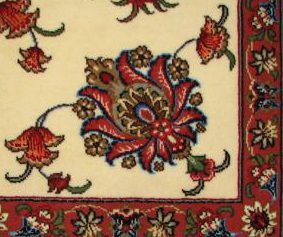
RosettaShah Abbasi:Shah Abbasi is a motif that first appeared in the Saxon era ,known as lotus. Later during the Safavid era, with a minor modification, the lotus motif changed to the Shah Abbasi motif named after one of the great Safavid kings. The Shah Abbasi pattern is a group of small palms that can be found anywhere on the carpet or in the medallion as well as in the borders. Shah Abbasi motifs are often seen in Kashan, Isfahan, Mashhad and Nain carpets. But it is perhaps more common in carpets Tabriz.
Shah Abbasi
In the next article we will discuss other Persian carpet patterns and the history behind each one.
Per fornire le migliori esperienze, utilizziamo tecnologie come i cookie per memorizzare e/o accedere alle informazioni del dispositivo. Il consenso a queste tecnologie ci permetterà di elaborare dati come il comportamento di navigazione o ID unici su questo sito. Non acconsentire o ritirare il consenso può influire negativamente su alcune caratteristiche e funzioni.
Funzionale
Always active
L'archiviazione tecnica o l'accesso sono strettamente necessari al fine legittimo di consentire l'uso di un servizio specifico esplicitamente richiesto dall'abbonato o dall'utente, o al solo scopo di effettuare la trasmissione di una comunicazione su una rete di comunicazione elettronica.
Preferenze
L'archiviazione tecnica o l'accesso sono necessari per lo scopo legittimo di memorizzare le preferenze che non sono richieste dall'abbonato o dall'utente.
Statistiche
L'archiviazione tecnica o l'accesso che viene utilizzato esclusivamente per scopi statistici.L'archiviazione tecnica o l'accesso che viene utilizzato esclusivamente per scopi statistici anonimi. Senza un mandato di comparizione, una conformità volontaria da parte del vostro Fornitore di Servizi Internet, o ulteriori registrazioni da parte di terzi, le informazioni memorizzate o recuperate per questo scopo da sole non possono di solito essere utilizzate per l'identificazione.
Marketing
L'archiviazione tecnica o l'accesso sono necessari per creare profili di utenti per inviare pubblicità, o per tracciare l'utente su un sito web o su diversi siti web per scopi di marketing simili.